You do not need a telescope to watch a meteor shower. You need somewhere dark, a clear view of the sky and a little patience.
That is what makes the Geminids such a good reason to leave Karachi’s lights behind. Every December, this annual meteor shower gives us an opportunity to spend a night looking up, waiting for those brief streaks of light that we usually call shooting stars.
At The Time Travelers, we organize dark sky expeditions and astronomy excursions in Pakistan for people who want to experience the night sky beyond the city. For anyone curious about stargazing, a meteor shower is a wonderfully simple place to begin.
Why travel for the Geminids?
In my original guide to the Geminids meteor shower in 2025, I wrote about heading away from city lights, including the possibility of a Karachi-to-Balochistan expedition. The reason for travelling is just as relevant today: darkness makes a difference.
From a brightly lit neighbourhood, you might catch a particularly bright meteor. Fainter ones can disappear into the glow above the city before you ever notice them.
A darker observing site gives you a better chance of seeing those faint streaks. It also gives you a reason to settle in for a proper observing session, rather than step outside for five minutes and decide that nothing is happening.
There is a rhythm to watching meteors. You wait, scan the sky and get distracted by the stars. Then a streak appears, sometimes so briefly that you turn to ask whether anyone else saw it.
That anticipation is part of the experience.
What exactly are the Geminids?
The Geminids are an annual meteor shower that peaks around the middle of December. They are associated with debris from 3200 Phaethon, an asteroid, rather than a comet.
When this debris enters Earth’s atmosphere at high speed, it produces the bright trails we call meteors. The name “Geminids” comes from Gemini, the constellation containing the point from which the meteors appear to spread across the sky.
Gemini is a useful reference, but you do not have to stare directly at it. Meteors can appear across a wide area of sky, which is one reason your unaided eyes are so useful for watching them.
A telescope is optional; darkness is the priority
People often assume that an astronomy excursion requires looking through a telescope all night. Meteor watching is different.
A telescope shows a small part of the sky. To catch meteors, you want a broad view. Find a comfortable position, look up and give yourself time to notice what is happening.
Allow roughly 30 minutes for your eyes to adjust to the dark. Keep bright phone screens and torches out of your direct view, and bring warm layers and something comfortable to sit or lie on.
You do not need to know the constellations before you arrive. Curiosity is enough.
Choosing a dark sky location beyond Karachi
Balochistan is one direction to consider when planning an astronomy excursion from Karachi. The choice of observing site matters more than simply travelling a long distance.
An effective site needs low light pollution and an open view, alongside suitable access and permission to use the location. Weather, the Moon’s brightness and the timing of the shower all affect the observing plan.
Dark skies improve the opportunity; they do not guarantee a particular number of meteors. Activity varies, and clouds or moonlight can change what you see. We prefer to plan around those conditions and give people a realistic idea of the night ahead.
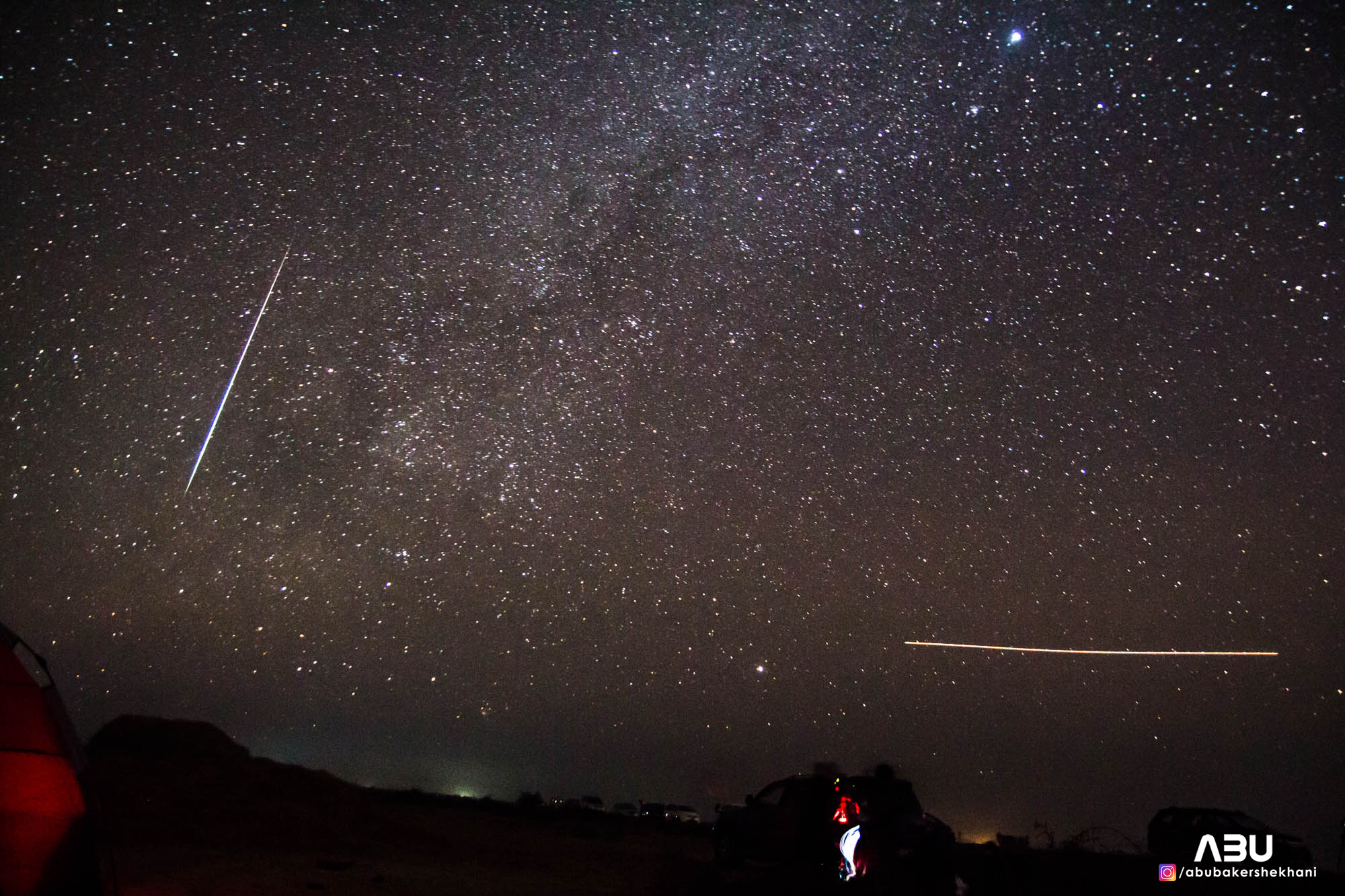
A photograph from an earlier Geminids night
My original article also includes a Geminid meteor photograph I captured on 14 December 2020.
It is a reminder that the interest behind these journeys stretches beyond a single season. Each December brings another opportunity to return to the sky, whether with a camera or simply with time to watch.