Some nights give us a good reason to leave the city and look up.
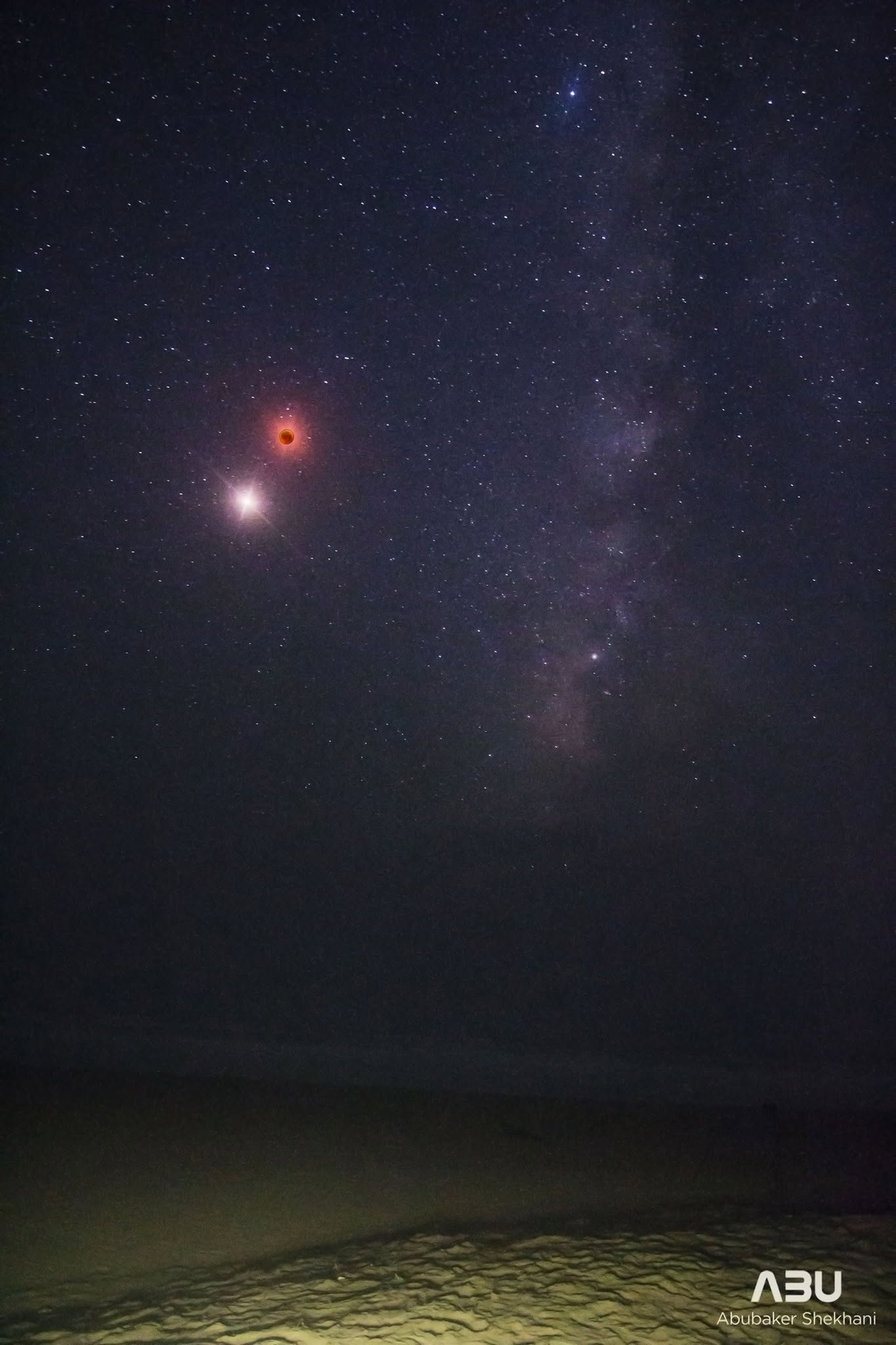
The night of 27–28 July 2018 was one of them. The Moon was about to pass through Earth’s shadow in the longest total lunar eclipse of the 21st century. On the same date, Mars reached opposition, adding another reason to spend the night outdoors.
For this occasion, I organized a dark sky expedition to Balochistan through The Time Travelers, bringing people together to witness the total lunar eclipse away from the lights of the city.
The destination was part of the experience. We were travelling for something that could not be brought forward, postponed or repeated the following evening. The sky had its own schedule, and we were going out to meet it.
One night, two reasons to look up
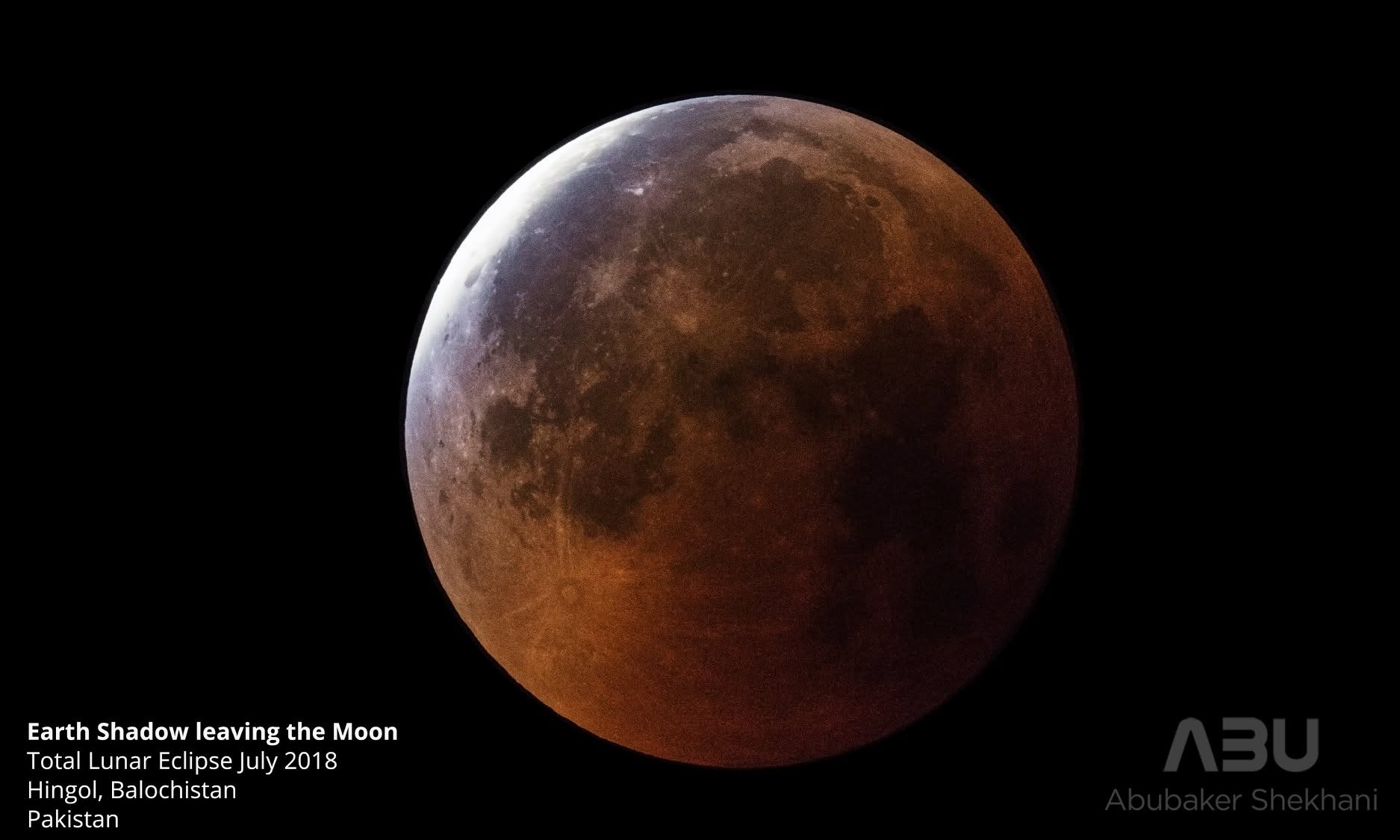
The July 2018 eclipse was remarkable for the length of its total phase: approximately one hour and 43 minutes. That made it the longest total lunar eclipse of the 21st century.
For observers in Pakistan, totality began at around 12:30 a.m. on 28 July and ended at around 2:13 a.m. The eclipse reached its maximum at approximately 1:22 a.m., Pakistan Standard Time.
Mars was another attraction that night. At opposition, Mars appears opposite the Sun in our sky, with Earth between them. Its closest approach to Earth followed on 31 July 2018, the closest since 2003.
It was an unusual opportunity to spend a night following the Moon’s changing appearance while a bright Mars shared the sky.
Why take an eclipse expedition to Balochistan?
A lunar eclipse does not require a dark sky location. With clear weather and the Moon above the horizon, it can be watched from Karachi or elsewhere in Pakistan, even with city lights nearby.
So why travel?
For us, the eclipse was also a reason to make time for astronomy. Going away from the city turns a quick glance at the Moon into a night devoted to the sky. There is time to follow the event, ask questions and understand what is happening above us.
Dark sky locations also offer better conditions for observing faint stars and other celestial objects when the Moon and weather permit. The Moon itself normally brightens the sky around a full Moon; during totality, its light is greatly reduced.
That combination—an exceptional celestial event and a journey beyond the city—is at the heart of the astronomy excursions we develop at The Time Travelers.
What makes the Moon turn red?
During a total lunar eclipse, Earth moves between the Sun and Moon, and the Moon passes into Earth’s central shadow.
Some sunlight still reaches it after passing through Earth’s atmosphere. The atmosphere scatters much of the blue light and bends redder light into the shadow, giving the eclipsed Moon its familiar copper or reddish appearance.
You do not need a telescope to appreciate the change. A clear view of the Moon is enough. Binoculars or a telescope can offer a closer look, but the event belongs to anyone willing to step outside and watch.
Photographs from the expedition
The photographs accompanying this story document our July 2018 lunar eclipse expedition to Balochistan, organized by Abubaker Shekhani of The Time Travelers.
They give this event a place in our history: a journey made for astronomy, with a rare eclipse as the reason to gather under the sky.